
🧭 Inner Compass: Is Your Daily Reading Goal Creating Childhood Burnout?
7 guilt-free ways to spark your child’s imagination through reading. Minus the pressure.

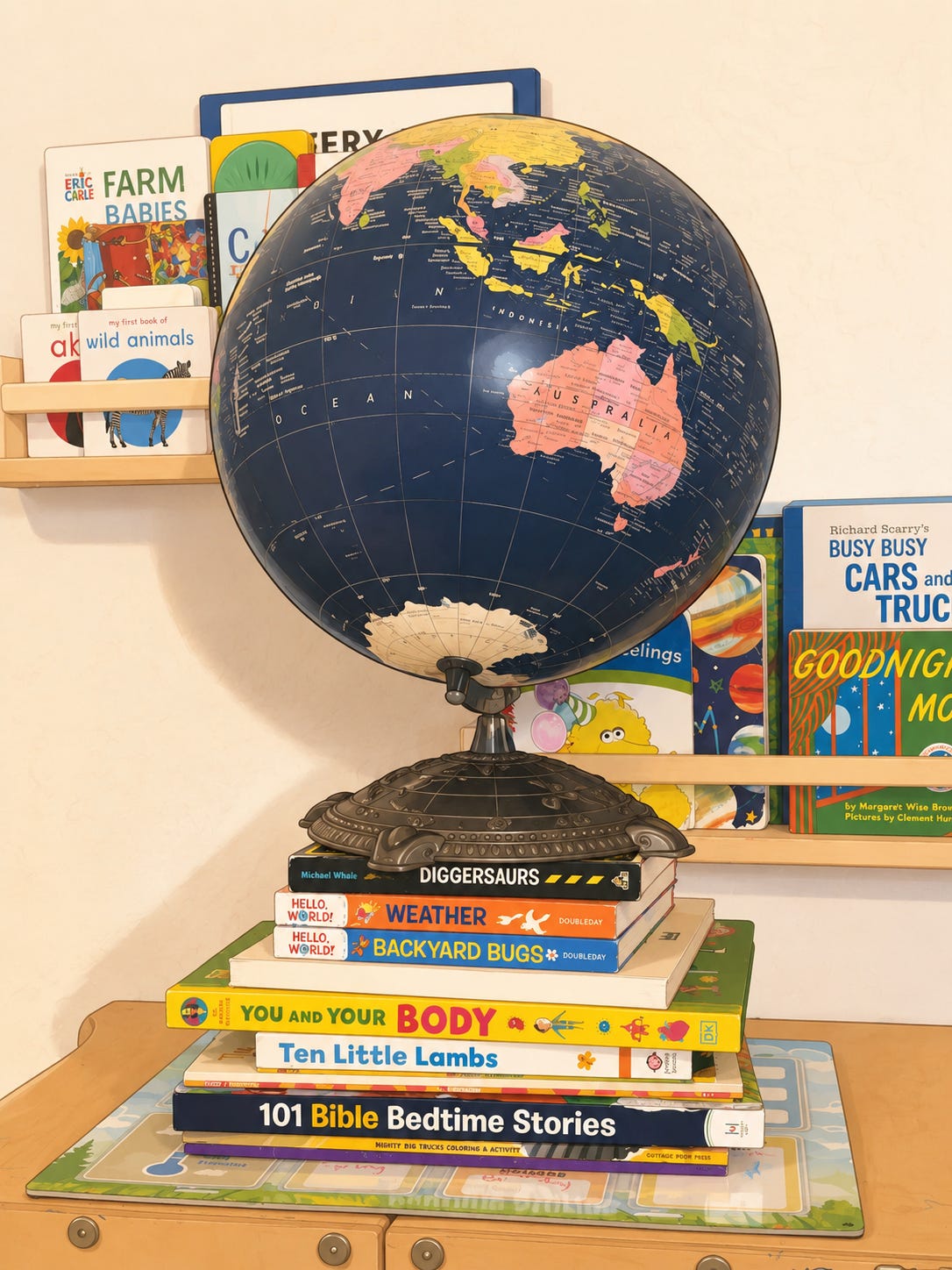
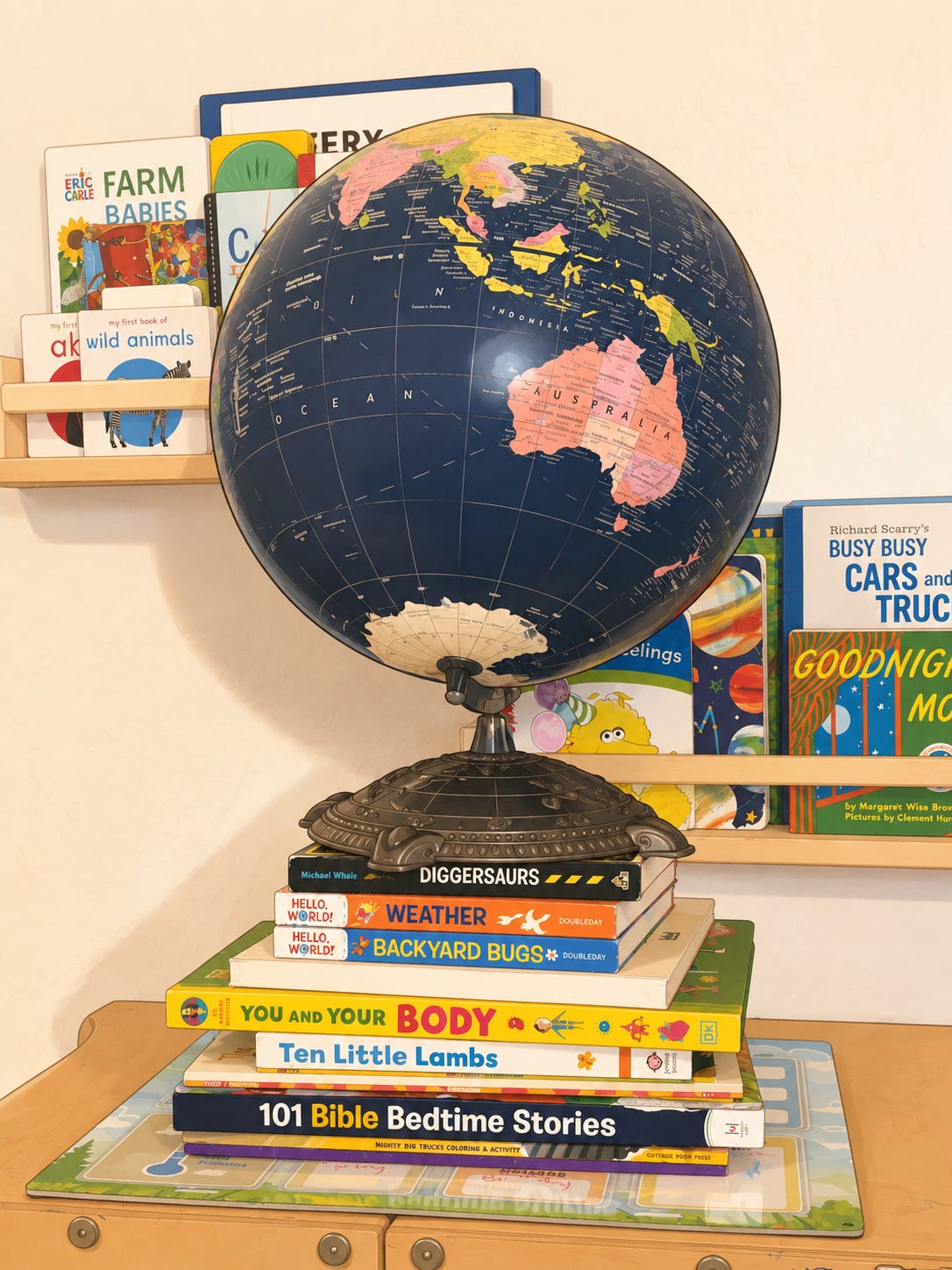
Books live in every corner of our home. They crowd the media console, spill over the shelves, and are stacked in piles that serves as a pedestal that props up our globe. For us, books are a way of life. In the morning, we reach for pages instead of the TV remote. At bedtime, we read a minimum of two books, although my son frequently and successfully negotiates for a third. Whether we are hunting through the library stacks or bringing home fresh bookstore finds, the constant search for the next great story is always in the back of our minds.
Through these pages, my kids have discovered worlds I could never fully explain on my own. There is no way I could accurately depict how massive a stegosaurus or even a yeti is without a book bringing the creature to life. How could I capture the swirling gas storms of Jupiter’s Great Red Spot, or the unique beauty of Venus, without those brilliant pictures?
Books give my children the blueprints for their world. Their imaginations instantly leap from the page into reality, turning our living room into outer space or a prehistoric jungle.
But recently, a thought caught up with me in the middle of our busy routine: How much reading is actually enough to get those imaginative juices flowing? And what should we focus on if we stop counting pages and book counts?
I did a deep dive to find out how we can protect this magic without the pressure, and I’m so excited to share what I discovered with you.
The Threshold: How Much Reading is “Too Much”?
When it comes to tracking page metrics, the parenting world is flooded with strict rules: “Read 20 to 30 minutes every single day,” or “Aim for at least two whole chapters per night.”
Research into childhood literacy suggests a harsh reality: forcing children into long, mandatory reading blocks can be deeply counterproductive. Forcing rigid quotas often sparks anxiety, leading kids to avoid books altogether.
Child development and psychology experts note that burnout is less about a universal “magic number” of pages, and more about exceeding a child’s specific cognitive and emotional capacity. True reading burnout typically sets in under three conditions:
Exceeding the 30-Minute Exhaustion Wall: For developing minds, the mechanical act of decoding text requires massive brainpower. Forcing a tired child to push past 20 or 30 minutes causes severe cognitive fatigue.
The “Performance” Pressure: When reading feels like an interrogation (where parents constantly stop to correct pronunciation or quiz comprehension) the brain treats it as a stressful exam rather than a creative playground.
Ignoring the Avoidance Signs: If a child starts making excuses to skip reading time, guesses wildly at simple words out of exhaustion, or throws severe tantrums at the sight of a book, their brain is signaling that it has hit its limit.
🌿7 guilt-free ways to spark your child’s imagination through reading, without burnout:
Let them manipulate the picture: Stop reading to quiz them and instead ask how they visualize a scene, letting their mind flex its creative muscles.
Limit it to 15 minutes: Remove the pressure of long sessions; a brief daily habit is completely enough to trigger deep imaginative thinking.
Bridge books into active play: Use a story as a quick launchpad for a new theme in their real-world pretend play.
Model your own literary escape: Let your child see you reading for fun, demonstrating that stepping into another world is a lifelong joy, not a chore.
Co-create a magical future story: Stop reading the text and ask, “What happens next?” to practice collaborative, open-ended innovation together.
Connect reading to real discovery: Pair a book’s topic with a simple daily activity, using literature to spark real-world curiosity and understanding.
Share books to build empathy: Read about diverse characters to open their minds to new ideas, cultures, and ways of experiencing the world.
🎯 Family Game Time:
Story Chain is a low-pressure game that turns any book into a cooperative imagination game without tracking a single page.
How to Play
The Catalyst: Grab any book and read exactly one sentence or paragraph out loud to set the scene.
The Pivot: The next player must continue the story by starting their sentence with the word “Fortunately...”
The Twist: The following player must continue the story by starting with “Unfortunately...”
The Loop: Keep passing the story around the family, alternating between “Fortunately” and “Unfortunately.”
Why This Works
No Page Goals: You only need a single sentence from the book to start.
Zero Parental Burnout: Your child does the heavy lifting of imagining what happens next. You don’t have to keep pushing them to read the actual text.
Manipulates the Picture: It forces everyone to instantly picture a new scene in their mind.
Encourages Innovation: Kids love the sudden plot twists, which naturally builds the “innovation muscles.”
💛 What We Carry Forward:
1. Books give children blueprints for the world, then imagination turns those blueprints into reality.
2. Reading should feel like a doorway into wonder, not a performance review.
3. Burnout begins the moment curiosity gets replaced by pressure.
4. A single meaningful story can spark more imagination than hours of forced reading.
5. The goal is not raising kids who finish the most pages. It is raising kids who never lose their sense of wonder.
The journey continues! Check your inbox tomorrow for “Crafty Workshop.” It is filled with simple activities to bring the imagination theme into your family playtime. Feel free to share your experiences or suggest topics you’d like to see more of.
Link to my latest article here!

I love this game idea. My daughter loves listening to me read but as she hits the point of learning, she’s often frustrated that she can’t do things herself. I’ll give this one a try!
We love reading in our household and have made it into quality family time by reading a book together and then having a watch party for the movie.
Themed dinners, costumes, or just giant bowls of popcorn make it feel like a celebration for the book read.
I LOVE the story chain game. We have a ton of cool games we play in the car, and this is perfect. Thanks for including such a cool and practical way to make reading fun.