
🧭 Inner Compass: 5 Ways to Practice Gratitude Together as a Family
Simple daily habits to notice the ordinary, live your values, and share gratitude as a family.

I know it’s not November, but hear me out. Gratitude is much more than a holiday tradition. It is a quiet, steady mindset that keeps us grounded when life feels overwhelming.
Gratitude shows up in obvious ways. Picking up your smiling kids after a long day at work. Feeling relief when you realize you are healthy while someone else is facing illness. Soaking up the attention at a birthday dinner. These moments come in waves. They are visible and expected. But the real work of gratitude happens in the ordinary. In the carpools. In the laundry. In the tired goodnights. Gratitude in the mundane is what steadies us and helps us reset.
In my twenties, I knew I was fortunate. I had a loving family, a meaningful career, and a husband who was also my best friend. But awareness is not the same as gratitude. It is easy to recognize blessings in life’s highest highs and even in the lowest lows. The contrast makes them obvious. The middle is where we drift.
Then came motherhood. Career shifts. Staying home. The layers that once defined me were rearranged. Postpartum was beautiful and painful all at once. Breastfeeding was harder than I expected. I was healthy, but I did not always feel strong. My income paused. I was comfortable, yet I caught myself comparing this year’s numbers to years before. Life was full, yet different.
Now, I focus on my children. The most meaningful work I have ever done. I always find myself admiring their capable little bodies. Their bright eyes and curly hair. The way they trust me completely. I made them. What a privilege. What an honor that I am grateful for! They deserve my presence. They deserve a mother who sees abundance, not lack.
That is when I began to understand that identifying our values creates awareness, and that awareness opens the door to gratitude. When we are clear about what matters most, we begin to see how much of it we already have. Values give language to what we cherish, and gratitude grows from recognizing those gifts in our daily lives. Our children absorb what we practice far more than what we say. In a family, gratitude becomes a shared rhythm, reflecting back and forth like two mirrors catching the same light. When we live with intention, our children learn to carry that intention into their own lives.
If we want balance in our lives, we cannot wait for perfect seasons. We anchor ourselves in small, intentional shifts. Gratitude becomes less about a feeling and more about a discipline. Name your values. Name your highs. Name your lows. Check-in with yourself often. Remind yourself how good life truly is. When you reflect gratitude consistently, your children learn to see the world through that same lens.
🌿5 simple ways to keep value in motion:
Say thank you out loud for small, everyday actions.
Verbalizing appreciation for routine tasks such as cooking dinner or helping with chores reinforces that contributions are noticed and valued.
My son will always offer to help cook. Anything that requires mixing, he’s your guy. For him, it’s a learning experience and opportunity to practice fine motor skills. It’s easy to ignore his genuine effort from this perspective. But when I pause and look at it through a lens of gratitude, I see it differently. He’s not just mixing ingredients. He’s a thoughtful kiddo who simply wants to spend time with me.
And for that, I am grateful.
Make eye contact when expressing appreciation.
Pausing to look at someone directly while saying thank you strengthens emotional connection and communicates sincerity.
I incorporated this recently with my husband. With two kids and a family calendar that is double booked and nonstop, we are often pulled in different directions. Some days it can feel like we are just two ships passing in the night.
Taking a few seconds to make eye contact has become a simple way for us to connect in the middle of the chaos. It is also a moment to pause and be thankful that we have each other. After all, we prayed for and built this life together!
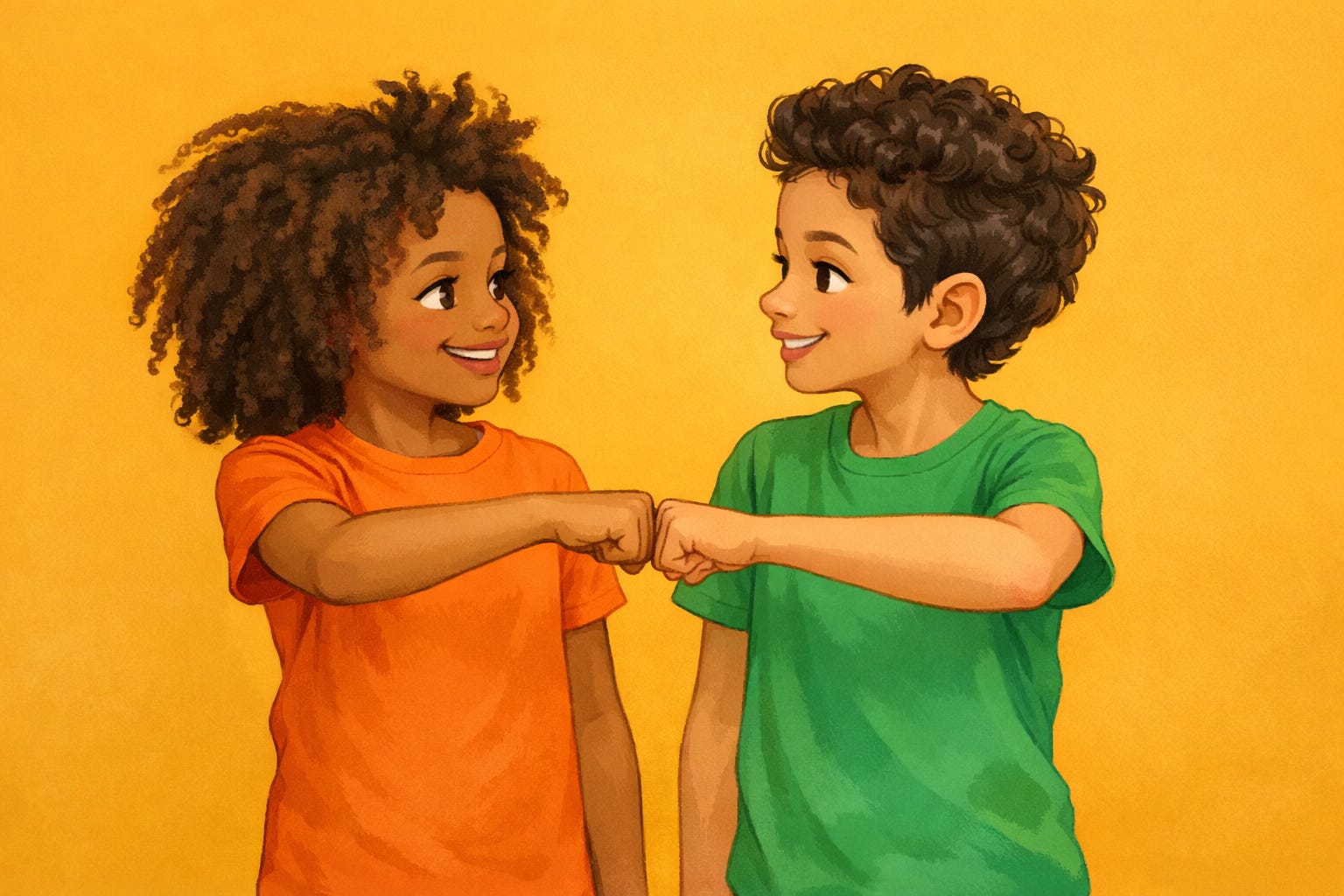
Acknowledge effort, not just outcomes.
Recognizing hard work, persistence, and intention teaches that growth and character matter more than perfection or results.
Perfection is overrated and quite literally impossible. Instead, I focus on acknowledging effort, intention, and progress. Doing this helps build sustainable character traits that my child can carry with them into adulthood.
End the day by sharing one thing you appreciated about each other.
This simple routine shifts focus toward positive moments and helps family members feel seen and affirmed before the day ends.
Personally, this will be my new focus during our bedtime discussions. At night we read books, pray as a family, and say our affirmations. I usually ask my son what the most challenging part of his day was and what the best part was. Instead of asking about the best part, I can reframe the question and ask what he was grateful for today.
Model gratitude consistently so children learn by example.
When adults regularly express appreciation in calm and authentic ways, it shapes a household culture where gratitude becomes natural, practiced, and meaningful.
Try this:
Narrate gratitude out loud so children hear appreciation for everyday moments and people. Express appreciation for your partner in front of your children so they see respect and teamwork modeled in the family.
Leave small thank you notes for community helpers like teachers, bus drivers, or mail carriers so children see that gratitude extends beyond the home.
Practice gratitude even during frustrating moments so children learn that appreciation can exist alongside challenges.
Thank children for their character traits like kindness, patience, and effort rather than focusing only on outcomes. Regularly tell children you are grateful for them simply because of who they are.
Ask simple reflection questions like “What was something good about today?” to help children notice positive moments.
Take gratitude walks and point out things you appreciate in your surroundings.
Keep a family gratitude jar where everyone can write down small moments they are thankful for and read them together later.
🎯 Family Game: Gratitude Adventure Map
Spark connection through fun games.
Theme: We are already surrounded by good things.
How to Play:
1. Make a simple treasure map of your house.
Designate 5 locations and hide a small sticker or coin at each spot:
Kitchen
Bedroom
Front door
Bathroom
Backyard (or window)
2. At each stop, ask one simple question:
Kitchen:
“What is your favorite food we eat at home?”
Follow up: “Who makes it for you?”
Bedroom:
“What is your favorite thing on your bed?”
Follow up: “How does it make you feel?”
Front Door:
“Where is somewhere fun we go together?”
Bathroom:
“What is something that keeps your body clean or healthy?”
Backyard or Window:
“What is something outside that you like to look at or play with?”
Keep it lighthearted. Let them answer freely.
3. The Final Stop: The Mirror
Have them look in the mirror and ask:
“What is something you like about being you?”
Then you go too.
Why This Works for Little Kids
It connects gratitude to things they can see and touch.
It builds awareness without heavy language.
It reinforces safety, care, and provision.
It models that gratitude is part of normal life, not a lecture.
💛 What We Carry Forward:
Gratitude lives in the ordinary. The quiet moments in the messy kitchen, a bedtime hug, or a shared glance are where the richness of life quietly waits to be noticed.
Values give gratitude its lens. When we identify what truly matters, we see the gifts around us more clearly. Awareness turns fleeting moments into meaningful practice.
Modeling is the heartbeat of family gratitude. Children do not learn gratitude from lectures, but from seeing it reflected in our words, gestures, and everyday choices.
Adventure unlocks attention. Even a simple treasure hunt transforms familiar spaces into opportunities for wonder, connection, and mindful appreciation, making gratitude active and alive.

Thank you for reading! Check your inbox tomorrow for “Crafty Workshop.” It is filled with simple activities to bring the gratitude theme into your family playtime. Feel free to share your experiences or suggest topics you’d like to see more of.
Link to my latest article here!

I love this gratitude game! Cant wait to test it out with our family and get these conversations flowing. Love these tips too ✨ Honestly have been thinking of cuter ways to practice “thanks giving” without the holiday tied around it- so this was very well timed for us 🙌
This was wonderful! Gratitude is important for the giver and receiver! I plan to show more gratitude openly so my children can model it.